
HGTECH 武汉华工激光工程责任有限公司 privacy policy
Copyright HGLaser Engineering Co,.Ltd. All Rights Reserver.
Green Laser SLM
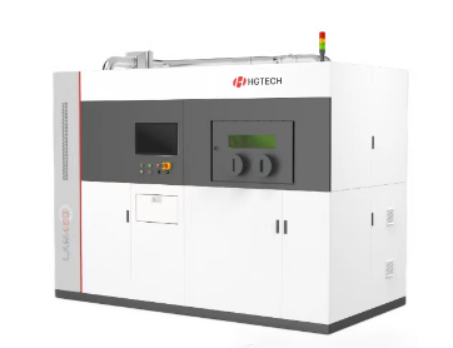
Infrared SLM
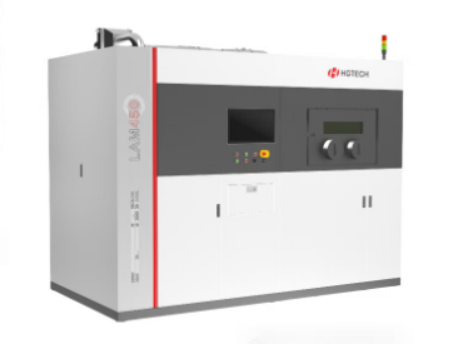
As thermal management demands for AI computing hardware continue to escalate, copper additive manufacturing has become a critical breakthrough pathway. HGLaser officially launches two metal 3D printing intelligent systems — Infrared SLM and Green Laser SLM — building a dual-technology roadmap that covers the full spectrum from mass production to ultra-precision forming, enabling efficient scaling from prototypes to high-volume manufacturing for AI computing hardware.
The foundation of AI large model competition lies in computing power, yet the physical limits of computational output are increasingly constrained by thermal management capabilities.
With GPU power consumption per chip exceeding the kilowatt level and thermal flux in high-speed optical modules rising exponentially, traditional “machining + welding” copper cooling solutions can only achieve simple straight-channel structures. Welding thermal resistance and leakage risks remain persistent challenges.
In contrast, additive manufacturing enables the creation of integrated microchannels, topology-optimized heat exchange structures, and ultra-thin fins down to 0.1 mm, opening a new dimension for thermal design. The ability to achieve scalable copper additive manufacturing is becoming a decisive factor in the competitiveness of AI hardware supply chains.
In copper additive manufacturing, two mainstream technological routes currently exist: infrared laser SLM (1064 nm) and green laser SLM (532 nm). These are not competing alternatives but complementary solutions tailored for different application scenarios.
Infrared focuses on mass production efficiency and cost effectiveness, while green laser targets ultra-precision and complex geometries, each serving distinct manufacturing requirements.
Infrared SLM (1064 nm) vs Green Laser SLM (532 nm)
Copper Absorption Rate:
Infrared: relatively low (<10%), requiring high power or process compensation
Green: significantly higher (~40%), offering natural absorption advantages
System Maturity:
Infrared: highly mature industrial ecosystem with lower acquisition and maintenance cost
Green: emerging technology with higher equipment cost
Process Advantages:
Infrared: high efficiency with multi-laser parallel processing, large build volume, wide material compatibility (aluminum, titanium, stainless steel)
Green: finer laser spot (~40 μm), higher density, superior surface quality, reduced post-processing requirements
Typical Applications:
Infrared: large-scale server cooling modules and general metal structural parts
Green: pure copper microchannels, high-frequency topology heat sinks, ultra-thin fins (0.1 mm class)
Mass Production Challenges:
Infrared: high reflectivity of copper leads to melt pool stability challenges
Green: higher equipment investment and narrower process window with limited industrial experience
The infrared route offers a pragmatic solution for large-scale, cost-sensitive multi-material manufacturing. The green laser route, enabled by fundamentally improved laser absorption, represents an advanced solution for high-end precision copper thermal components.
Together, both approaches cover the full manufacturing spectrum from volume production to ultimate precision.
Based on deep insight into the additive manufacturing industry, HGLaser introduces two intelligent metal 3D printing systems: a multi-laser-head infrared SLM system and a green laser SLM system.
These platforms establish a fully in-house capability spanning laser source, equipment, and production systems, systematically addressing the bottlenecks of both technological routes.
Each system is optimized for either production efficiency or precision forming, delivering scalable, reliable, and production-ready solutions for different application needs.
Multi-Laser Head Infrared SLM Metal 3D Printing System
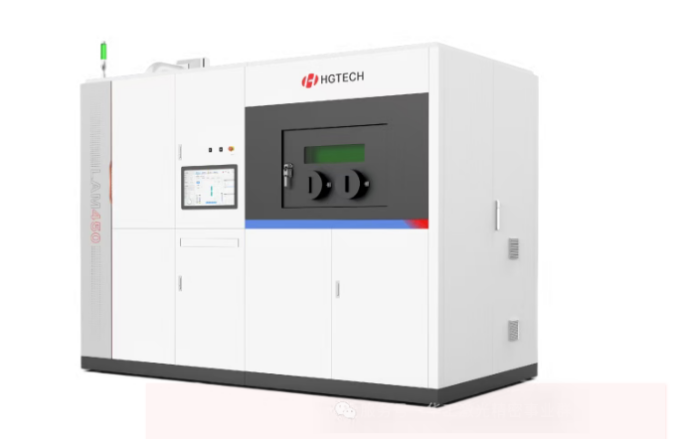
Multi-material compatibility
Mature mass production capability
Designed for large-scale manufacturing of AI server cooling modules and mainstream metal structural components such as aluminum alloys, titanium alloys, and stainless steel, supporting continuous industrial production workflows.
Specifications:
6–8 laser heads in parallel / 450 × 350 mm build volume / total power exceeding 6000 W
Green Laser SLM Metal 3D Printing System
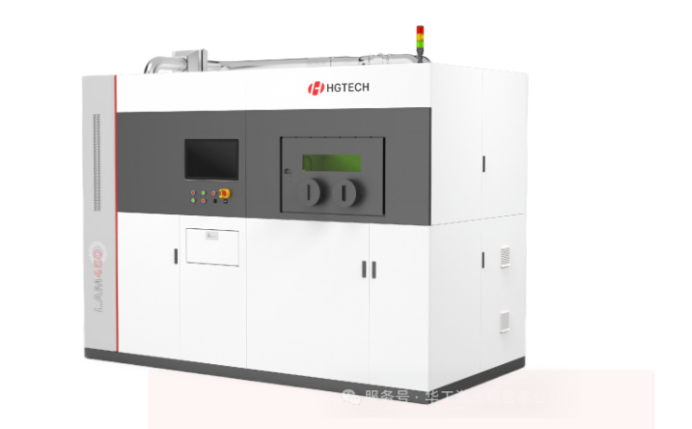
Overcomes high-reflectivity material challenges
Enables complex integrated structures
Specialized for high-precision copper and other highly reflective materials, enabling integrated manufacturing of complex thermal components, including microchannel structures, 3D lattice structures, and ultra-thin fins down to 0.1 mm — achieving high-fidelity reproduction of simulation-optimized thermal designs.
Performance Highlights:
Density > 99.9% / 0.1 mm thin-wall capability / electrical conductivity up to 101.5% IACS
The rapid expansion of AI computing capacity is accelerating the evolution of servers, optical modules, and computing chips toward higher integration and stronger thermal requirements.
Additive manufacturing, with its inherent advantages in producing complex integrated structures and enabling rapid design iteration, is shifting from an optional technology to a critical manufacturing enabler.
Focusing on AI thermal management and precision optical module components, HGLaser has built a full additive manufacturing workflow covering prototyping, validation, and large-scale production, providing customized manufacturing solutions for industries including 3C electronics, AI communications, low-altitude economy, and robotics.
The company integrates laser source development, equipment manufacturing, production lines, and intelligent control systems into a fully autonomous value chain, forming a complete ecosystem of “intelligent equipment — automated production lines — smart factories.”
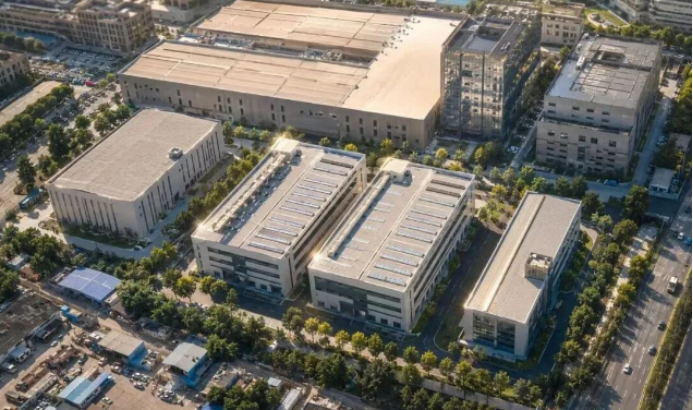
Driven by strong demand for copper additive manufacturing in AI industry growth, HGLaser is accelerating the industrialization of its additive manufacturing division and scaling production capacity.
The company is constructing an AI high-end thermal component 3D printing intelligent manufacturing base in the core area of Wuhan Optics Valley, with a planned total area of approximately 80,000 square meters.
Upon completion, the facility is expected to achieve an annual output value of 2 billion RMB, aiming to become a globally leading demonstration base for mass production of AI core components via additive manufacturing.

